ESP32-S31 Dev Kits Are Arriving: What the Chip Gives You, and Which ESP32 to Buy in 2026
Key takeaways
- The ESP32-S31 combines two RISC-V cores at up to 320 MHz, 2.4 GHz Wi-Fi 6, Bluetooth 5.4 LE and Classic, 802.15.4 for Thread and Zigbee, and a gigabit-capable Ethernet MAC. Espressif announced mass production on 27 July 2026, but the datasheet is still pre-release v0.6.
- Kits range from Espressif’s own ESP32-S31-Function-CoreBoard-1 (gigabit Ethernet, reported at $19.70 on AliExpress) to touchscreen boards at about $29 to $55. Official ESP-IDF support starts at v6.1.1 (16 November) and Arduino-ESP32 4.0.0 (19 November).
- We found no ESP32-S31 listing at the Indian shops we could check. ESP32-S3 boards at ₹950 to ₹1,850 remain the sensible buy for most makers and students; engineers should prototype on S31 now and ship it later.
ESP32-S31 dev kits are finally on sale, and the question Indian makers will ask first is simple: do you buy one? Espressif announced the chip on 26 March 2026 and said it had entered mass production on 27 July. Boards from Waveshare, VIEWE and GUITION followed, the latest on 20 November. Our short answer: most readers should still buy an ESP32-S3 today. The rest of this guide shows why, and when the S31 is the better choice.
What the ESP32-S31 is
Per Espressif’s pre-release datasheet (v0.6, marked preliminary), the chip has two high-performance RISC-V cores at up to 320 MHz plus a 40 MHz low-power core. It has 512 KB of SRAM, in-package octal PSRAM of 8, 16 or 32 MB, 60 GPIOs and an 8 × 8 mm QFN80 package rated -40 to 85 °C. The datasheet lists CoreMark at 2,195 for the two cores together at 320 MHz, against 1,330 for the ESP32-S3 at 240 MHz.
Radios are 2.4 GHz only: Wi-Fi 6, Bluetooth 5.4 LE with LE Audio plus Bluetooth Classic, and 802.15.4 for Thread 1.4, Zigbee 3.0 and Matter. The Ethernet MAC supports 10/100/1000 through an external PHY. Display and camera are parallel (RGB or i8080 LCD, DVP camera), with no MIPI. The SIMD instructions run on one of the two cores. The cores also support virtual memory (Sv32), which is why Espressif can offer a Linux developer preview.
How it compares with S3, P4 and C6
| ESP32-S31 | ESP32-S3 | ESP32-P4 | ESP32-C6 | |
|---|---|---|---|---|
| CPU | 2 × RISC-V, 320 MHz | 2 × Xtensa LX7, 240 MHz | 2 × RISC-V, 400 MHz | 1 × RISC-V, 160 MHz |
| SRAM | 512 KB | 512 KB | 768 KB | 512 KB |
| In-package PSRAM | 8/16/32 MB octal | 2 MB quad or 8/16 MB octal | 16/32 MB | None listed |
| Wi-Fi | Wi-Fi 6 (2.4 GHz) | 802.11b/g/n | None on chip | Wi-Fi 6 (2.4 GHz) |
| Bluetooth | 5.4 LE + Classic | 5 LE + Mesh | None on chip | 5.3 LE |
| 802.15.4 | Thread 1.4, Zigbee 3.0 | No | No | Thread 1.3, Zigbee 3.0 |
| Ethernet MAC | 10/100/1000, external PHY | None listed | EMAC via RMII | None listed |
| Camera and display | DVP camera, parallel LCD | DVP camera, parallel LCD | MIPI CSI and DSI, plus parallel | None listed |
| GPIO | 60 | 45 | 55 | 30 (QFN40) |
| Ambient range | -40 to 85 °C | -40 to 65 °C for octal-PSRAM parts (85 °C with PSRAM ECC) | -40 to 85 °C | -40 to 105 °C |
Sources are Espressif’s datasheets and product pages. The S31 (v0.6) and P4 (v0.7) datasheets are pre-release, so numbers can change, and Espressif publishes no chip prices on these pages. The P4 has no radio of its own, so a P4 board with Wi-Fi uses a companion chip.
The first ESP32-S31 kits
| Kit | Display | Ethernet | Price seen | Software |
|---|---|---|---|---|
| Espressif ESP32-S31-Function-CoreBoard-1 | None (40-pin header) | Gigabit RJ45 | $19.70 on AliExpress (CNX, May) | ESP-IDF |
| Waveshare ESP32-S31-Touch-LCD-4.3C | 4.3-inch, 800 × 480 | None listed | $45.99 to $54.99 (Waveshare) | ESP-IDF 6.1 only |
| VIEWE PLCM-UES31S043H800V480C-U | 4.3-inch, 800 × 480 | None listed | $38.99 (VIEWE store) | ESP-IDF only at launch |
| GUITION JC1060F570C | 7-inch, 1024 × 600 | 10/100 RJ45 | $28.71 to $29.39 Black Friday; regular $35 to $37, before tax (CNX) | Arduino and ESP-IDF demos |
All three third-party kits use the ESP32-S31-WROOM-3-N16R16V module, which CNX Software describes as 16 MB of flash and 16 MB of PSRAM. One catch: the chip supports gigabit Ethernet, but the GUITION board implements only Fast Ethernet. CNX suspects cost. Only Espressif’s own CoreBoard-1 offers gigabit.
How ready is the software?
Espressif’s FAQ names ESP-IDF v6.1.1, published 16 November, as the first official support tag, and Arduino-ESP32 4.0.0 on 19 November added the S31. Several kits launched earlier under a preview flag, so expect rough edges. A security caveat for product teams: the datasheet lists a Key Manager, but ESP-IDF v6.1.1 removed support for it on the S31 because the hardware needs further design changes. Espressif’s Linux board support package, based on kernel 6.18, is a developer preview that the company says is not recommended for production.
Which ESP32 should you buy?
- Maker or hobbyist: buy an ESP32-S3. It has the most libraries, tutorials and Indian stock. Choose S31 only if one board must combine Wi-Fi 6, Thread or Zigbee and Ethernet for a Matter or gateway project, and you accept ESP-IDF first.
- Student: start with the S3. Move to the P4 if your course covers MIPI cameras or displays or H.264 video, and remember it needs a separate radio chip. Treat Linux on the S31 as exploration only.
- Product engineer: prototype on the CoreBoard-1 or Korvo-1, but ship the S3 for now. The S31 datasheet is preliminary, the ecosystem is days old and Espressif publishes no chip price. Pick the P4 plus a companion radio if you need MIPI or H.264.
- Thread or Zigbee on a budget: the single-core ESP32-C6 does it with Wi-Fi 6 and no PSRAM.
These recommendations are our judgement, built on the datasheet figures above.
What it costs in India today
| Board | Seller | Price seen on 24 Nov | Stock |
|---|---|---|---|
| ESP32-S3-DevKitC-1-N8R8 | Electropi | ₹1,709.82 | In stock |
| Waveshare ESP32-S3 dev kit, N8R8 | ThinkRobotics | ₹1,849.99 | Out of stock |
| 7Semi ESP32-S3 DevKitC-1 N8R8 | Robocraze | ₹949, incl. GST | Sold out |
| Waveshare ESP32-P4-ETH | ThinkRobotics | ₹1,799.99 | Pre-order, 2 to 4 weeks |
| ESP32-P4X-EYE | DigiKey India | ₹3,363.09 | In stock |
| Any ESP32-S31 board | ThinkRobotics, Robocraze | No listing found | Not applicable |
We could not check Robu.in or Amazon.in directly, so “no listing” means none at the sites we could open. DigiKey India notes that duties and taxes are due on delivery, so imported S31 kits will cost more than the dollar prices above.
Why it matters for India
For Indian buyers the problem is supply, not specification: until a local distributor stocks S31 kits, a ₹1,700 S3 board from an Indian shop beats a $29 kit that arrives with import charges and a wait.
College labs and start-ups building Matter gateways or HMI panels have the most to gain, because one S31 can replace an S3 plus an Ethernet or 802.15.4 add-on. That saves board area and one BOM line, but only once stock and a final datasheet exist.
Our view
The S31 is a good chip arriving at the wrong moment for most readers. Wi-Fi 6, Thread and gigabit Ethernet on one part is the right combination for Matter gateways and smart panels, and Espressif has made the S3 look dated on paper. But a preliminary datasheet, a security block missing from the SDK and no Indian stock add up to a wait. Our advice: buy an S3 for what you are building this month, buy one S31 kit when an Indian seller lists it, and do not design the S31 into a 2027 product until the datasheet leaves preliminary status.
Related reading
- Espressif’s $2 ESP32-C61-MINI Puts Wi-Fi 6 and Bluetooth 5.3 Into a 13 mm Module
- Nordic’s nRF71 Puts Wi-Fi 6, BLE, Thread and an NPU on One Chip at 20x Lower Standby Power
- A 16GB Raspberry Pi 5 Now Costs $385. Here’s What Indian Labs and Makers Should Buy Instead
- ESP RainMaker Neo: Your Own IoT Cloud on AWS in About an Hour. Should You Use It?
Sources
- Espressif: ESP32-S31 Series Datasheet, pre-release v0.6, 2026-11-24
- Espressif: ESP32-S31 mass production announcement, 2026-07-27
- Espressif: ESP32-S31 release announcement, 2026-03-26
- Espressif: ESP32-S31 FAQ, 2026-11-24
- Espressif: Development boards, 2026-11-24
- GitHub (Espressif): ESP-IDF v6.1.1 release notes, 2026-11-16
- GitHub (Espressif): Arduino-ESP32 4.0.0 release, 2026-11-19
- CNX Software: GUITION ESP32-S31 development kit features 7-inch capacitive touch display, Ethernet port, 2026-11-20
- CNX Software: Waveshare ESP32-S31-Touch-LCD-4.3C, 2026-11-19
- CNX Software: VIEWE 4.3-inch ESP32-S31 display development board, 2026-10-14
- CNX Software: ESP32-S31 development boards for IoT, smart audio and HMI applications, 2026-05-22
- CNX Software: Espressif releases a Linux BSP developer preview for ESP32-S31, 2026-08-22
- Waveshare: ESP32-S31-Touch-LCD-4.3C product page, 2026-11-24
- Espressif: ESP32-S3, ESP32-P4 and ESP32-C6 datasheets, 2026-11-24
- Electropi: ESP32-S3-DevKitC-1-N8R8, 2026-11-24
- ThinkRobotics: ESP32-P4-ETH development board, 2026-11-24
- DigiKey India: ESP32-P4X-EYE, 2026-11-24
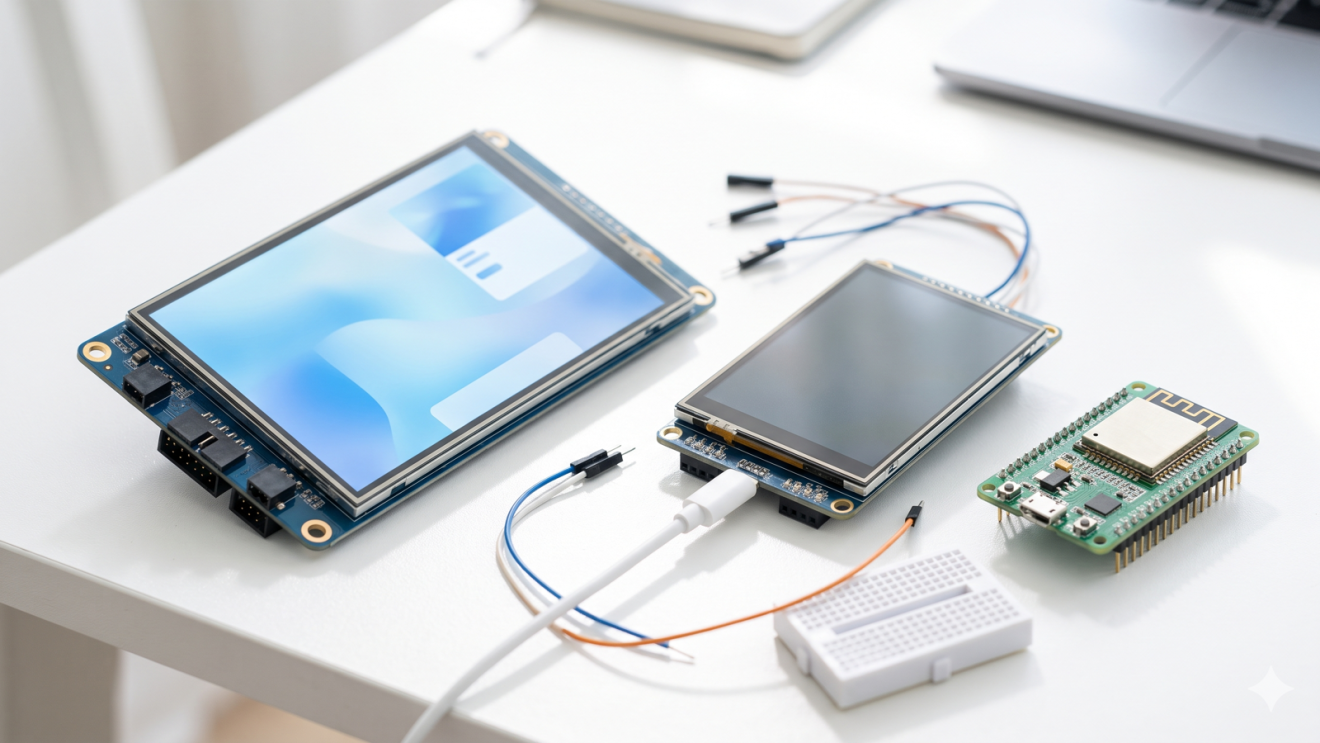
Representative image, AI-generated.
Related articles
- Explore the world of nRF Connect SDK Fundamentals for Electronic Engineers2 May 2023
- Exploring the dsPIC33CK64MC105 Curiosity Nano Evaluation Kit2 May 2023
- Arm University Program launches Embedded Linux Education Kit1 August 2017
- IoT Platforms and Development Boards6 September 2016
- India Needs 100,000 Chip Jobs in Three Years. Most Are Not in Chip Design17 November 2026