
India Needs 100,000 Chip Jobs in Three Years. Most Are Not in Chip Design
Key takeaways
- India’s chip drive could create more than 100,000 jobs in three years (ET Manufacturing, 15 November 2026); BCG estimates the existing 25,000-strong workforce will quadruple.
- CIEL HR Services tracked about 45,000 openings across more than 150 companies in the 12 months to November 2026, with demand shifting from chip design to process, equipment, yield, reliability and advanced packaging roles.
- Micron’s Sanand plant has about 1,300 employees, roughly 700 of them new graduates from electronics, mechanical, chemical, industrial and materials engineering (Business Today, 5 March 2026).
Semiconductor jobs in India could grow by more than 100,000 over the next three years, according to experts quoted by ET Manufacturing on 15 November. Boston Consulting Group estimates that the existing semiconductor workforce of 25,000 will quadruple. For an engineering student the headline matters less than the detail underneath it: most of the new roles are not in chip design.
Where the hiring is moving
Research by CIEL HR Services for ET shows recruitment shifting away from traditional chip design toward process engineering, equipment maintenance, yield management, reliability engineering and advanced packaging. CIEL’s CEO, Aditya Narayan Mishra, says these roles “until recently accounted for a negligible share of hiring”. The firm tracked about 45,000 openings across more than 150 companies in the 12 months to November 2026.
ET lists the companies with the most vacancies: Qualcomm, then AMD, Nvidia, Synopsys, Applied Materials, Infineon, Cadence and Micron. That is a mix of chip designers, design-software vendors, equipment makers and a memory maker, a reminder that the market is wider than fabs alone.
Who hires freshers, and from which degrees
Micron’s Sanand assembly and test plant is the clearest example. Business Today reported in March that of its nearly 1,300 employees, about 700 are new graduates. Manish Bhatia, Micron’s Executive Vice President for Global Operations, said they come from electronics, mechanical, chemical, industrial and materials engineering, and that they trained for three to six months in Malaysia and Singapore.
Technicians have a route too. IANS reported in May that the first batch of 16 trainees finished a six-week ITI-based cleanroom course at Dholera, open to any ITI trade. A national workforce strategy report from NCVET, published in July 2025, describes a “marked shortage of fab operators, process technicians, and ATMP engineers”. Its list of packaging and test roles includes die attach and wire bonding, solder ball attach, and failure analysis and reliability. This is the advanced packaging work Indian plants are now ramping up.
The numbers do not agree, and that is fine
| Source | What it measures | Figure |
|---|---|---|
| BCG (via ET, 15 Nov 2026) | Existing semiconductor workforce, expected to quadruple | 25,000 today |
| ET, citing experts | New jobs from the chip drive | 100,000+ in three years |
| CIEL HR Services (for ET) | Jobs created; talent pool; openings | about 67,500 in 18 months; about 150,000 in the pool; about 45,000 openings in 12 months |
| NCVET strategy report (Jul 2025) | Extra staff needed by 2032 | 2.75 lakh design, 25,000 fab, 29,000 packaging (ATMP) |
| PIB (Chips to Startup, Jan 2026) | Design-talent training target | 85,000 target; about 67,000 trained |
These figures measure different things: a workforce today, jobs created, openings, and needs by 2032. Do not add them up or compare them directly. Read them as a range of how fast the sector may grow, not as a forecast.
What government training covers today
The Chips to Startup programme targets 85,000 professionals, most of them B.Tech students, with an outlay of ₹250 crore over five years; PIB put the number trained at about 67,000 in January. Its focus is chip design: IANS describes it as training semiconductor design engineers. The newer Semicon 2.0 scheme, approved by Cabinet on 15 July 2026 with an outlay of ₹1,27,500 crore, lists talent as its sixth pillar and adds industry-led training in cleanroom operations and fab construction. That is where the manufacturing-side gap starts to be addressed.
What pay looks like
BCG partner Ankush Wadhera told ET that process, fab, design and systems specialists can earn four to six times what IT-services peers with comparable experience earn, especially at mid-to-senior levels, and that senior talent is in acute shortage. I could not find a second source or a salary survey for fab and packaging roles, so treat this as a sign of scarcity at the senior end, not as what a fresher will be offered.
What I would learn first
These are my suggestions, matched to the roles named above. They are not a syllabus from any employer.
- Statistics for manufacturing: statistical process control, yield analysis and basic failure analysis. They are the working language of yield-management and reliability roles.
- Measurement and test: oscilloscopes, curve tracing, automated test setups and the basics of reliability testing.
- Packaging basics: die attach, wire bonding and solder ball attach, the steps NCVET lists for assembly and test plants.
- Equipment fundamentals for mechanical and chemical students: vacuum, gas and fluid systems, controls and preventive maintenance. These are how you get into the equipment-maintenance roles ET describes.
- One documented project that shows any of the above. Employers say they can train entry-level and mid-level people; a project shows you learn fast.
Why it matters for India
Most Indian colleges teach design and software far better than manufacturing, so the roles growing fastest are the ones fewest graduates have prepared for.
Micron’s intake suggests that mechanical, chemical and materials graduates are hired alongside electronics graduates, and that employers train for months after hiring, so a visible project in measurement, statistics or reliability can count for more than the name of your department.
ITI and diploma holders have an entry route as well: the Dholera cleanroom course accepts any ITI trade.
Our view
Treat 100,000 as a ceiling, not a promise: the figures behind it measure different things, and nobody has published a salary survey for these roles. But the direction is clear, and it favours people who can measure, test and keep a process in control. If you are in your second or third year, pick one manufacturing-adjacent skill, such as reliability testing or statistical process control, and prove it with a small project. A stack of design certificates will not tell an employer that you can find out why a line’s yield dropped; one well-documented measurement project will start that conversation.
Related reading
- India’s Semiconductor Dream Needs 1 Million Skilled Engineers – and Urgent Upskilling
- Bridging the Skill Gap : Where are the Jobs for India’s Engineers?
- India’s Semiconductor Surge: Building a Million Jobs in IoT Embedded Systems by 2026
- Advanced IC Packaging: Transforming India’s Semiconductor Industry
- India Opens Semicon 2.0 for Fabs and OSAT, Clears 12 Component Plants Worth ₹7,503 Crore
Sources
- ET Manufacturing (Prachi Verma): Semicon boom expected to power up 100k jobs in three years, 2026-11-15
- PIB Research Unit: Chips to Start-up (C2S) Programme explainer, 2026-01-18
- IANS: India advances towards training 85,000 semiconductor design engineers: Ashwini Vaishnaw, 2026-03-07
- Business Today: Micron’s Sanand plant puts India on the chip map, but the hard part begins now, 2026-03-05
- IANS: 16 trainees graduate from India’s first ITI-based semiconductor cleanroom skilling programme in Dholera, 2026-05-19
- Fone Arena: Cabinet approves Semicon 2.0, 2026-07-15
- NCVET: India Semiconductor Ecosystem Workforce Development Strategy Report 2025, 2025-07
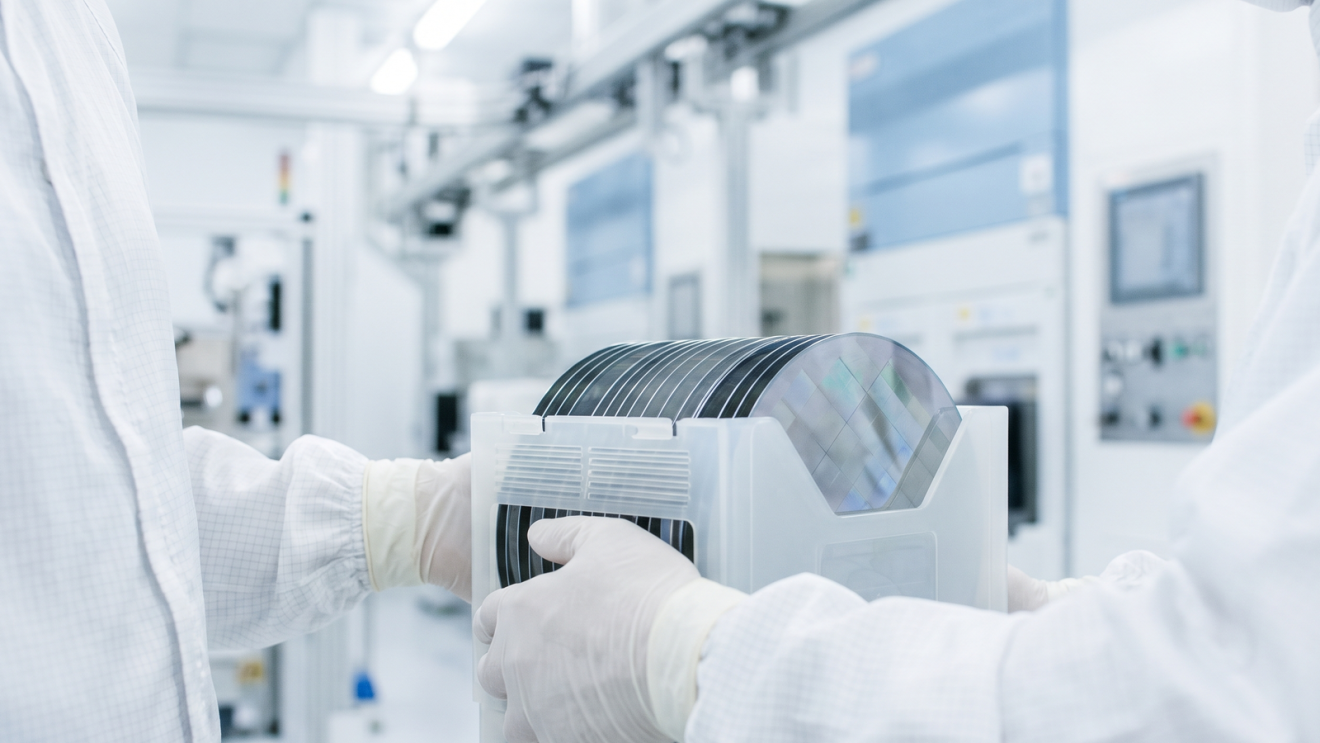
Representative image, AI-generated.
Related articles
- India Signs the San Francisco Declaration on Chip Supply Chains. What Engineers Should Watch17 November 2026
- India Opens Semicon 2.0 for Fabs and OSAT, Clears 12 Component Plants Worth ₹7,503 Crore17 November 2026
- SEMICON India 2026 Opens Today With 600+ Exhibitors — and One Scorecard Worth Watching18 September 2026
- Tata Electronics’ ₹27,000 Crore Jagiroad ATMP Plant Targets Production in FY2026–274 June 2026
- Tata Electronics and ASML Sign MoU to Power India’s First 300mm Semiconductor Fab in Dholera28 May 2026