India Signs the San Francisco Declaration on Chip Supply Chains. What Engineers Should Watch
Key takeaways
- On 15 November 2026 the US and nine Pax Silica participants, India among them, signed the San Francisco Declaration; five working groups are proposed but not yet formed.
- The text defines “sensitive technologies” and “critical infrastructure”, which includes ports, logistics networks, ICT and energy infrastructure; it contains no funding, deadline or enforcement mechanism.
- India was left out of Pax Silica’s December 2025 launch and joined on 20 February 2026; ORF notes the group’s proposed Pax Silica Fund would allocate US$250 million.
India has signed the San Francisco Declaration, a new shared text from Pax Silica, the US-led group formed to secure supply chains for chips, critical minerals, energy and AI infrastructure. It was signed on 15 November in San Francisco at the Pax Silica Founders Retreat, convened by US Under Secretary of State Jacob Helberg. The United States and nine participants put their names to it: Australia, India, Israel, Japan, South Korea, Qatar, Singapore, the UAE and the UK.
What the text says
The declaration is short, and most of it is definitions. It says economic security is fundamental to national security, and it fixes two terms the signatories will use from here on.
- Sensitive technologies: goods, software, materials, knowledge, components and the means of production that are essential to AI supply chains, and whose theft or acquisition by hostile actors would give a meaningful military or intelligence advantage, or undue economic leverage.
- Critical infrastructure: the physical and digital systems underpinning those supply chains, including ports, terminals, transport, communications and logistics networks, ICT and energy infrastructure, and the digital platforms that coordinate them.
Two details are easy to miss. China is not named; the text refers only to “hostile actors”. And the US text calls AI “super intelligence”, with a footnote saying that for some participants the term means artificial intelligence.
The signatories also resolve to set up working groups. The State Department lists five proposed groups:
- Pro-innovation policy frameworks
- Super intelligence (AI) adoption in key sectors
- Supply chain cooperation across the AI stack
- Safe harbors and supply chain security hubs
- Security and resilience
What it does not do
Read the text and you will find a statement of common understanding, not a treaty. No funding, deadline or enforcement mechanism appears in it, and the working groups are proposed, not formed. According to Outlook India, citing the Financial Times, Helberg tied the pact to a simple fact of the industry: the know-how to design a chip, the machine that makes it and the port that ships it can sit in different countries. Outlook also reports that Germany, Sweden, the Netherlands and the European Commission are expected to sign next week.
India’s own side of the bargain is being built elsewhere. The Semicon 2.0 programme opened its portal for fabs and OSAT applications earlier this month, and that is where the domestic half of this effort will show up.
How India got here
India was not among Pax Silica’s founding members when the group launched in December 2025. It signed the Pax Silica Declaration on 20 February 2026 on the sidelines of the AI Impact Summit in New Delhi. Electronics and IT Minister Ashwini Vaishnaw and Michael Kratsios, Director of the White House Office of Science and Technology Policy, witnessed the signing, and the Ministry of External Affairs called it another milestone in India-US relations. The November text is a second, separate document that builds on that first one.
Analysts see gains and risks. ORF’s April assessment compared India’s entry to the 2008 civil nuclear deal, a sector-specific agreement that changed the relationship without a formal alliance. It lists access to US technology and capital as the gains, and warns that India’s semiconductor policy has seen ambitious declarations without implementation always keeping pace, so partners will judge India by what it delivers. ORF also notes that the proposed Pax Silica Fund would allocate US$250 million to critical minerals, infrastructure and semiconductor manufacturing assets.
Why it matters for India
The definitions are the part that reaches Indian electronics makers first. Ports, logistics networks and the platforms that manage them are on the critical-infrastructure list, so I expect questions about where components, firmware and cloud services come from to reach EMS companies and product teams before they reach chip designers.
India’s side is still being built: with Semicon 2.0 only just open for fab and OSAT applications, ORF’s warning that implementation lags declarations is the test partners will apply.
The practical step for any Indian hardware team is cheap and boring: keep a record of where every component and software dependency in your product comes from.
Our view
The declaration is a definition, not a deal, and that is useful, because definitions decide who is in the room when money and technology are shared. India should ask for a seat in the two working groups I would watch most closely, supply chain cooperation across the AI stack and safe harbors and security hubs, and should arrive with projects, not requests. For engineers, I would not wait for rules. Build the provenance record now: a bill of materials that shows origin, a list of firmware and cloud dependencies, and a second source for every part you cannot easily replace. It will be worth having whichever way the working groups decide.
Related reading
- India Opens Semicon 2.0 for Fabs and OSAT, Clears 12 Component Plants Worth ₹7,503 Crore
- Tata Electronics and ASML Sign MoU to Power India’s First 300mm Semiconductor Fab in Dholera
- US Chip Toolmaker Lam Research to Invest Over $1 Billion in India’s Semiconductor Growth
- Semicon India 2025: India’s Leap Towards Becoming a Global Semiconductor Powerhouse
Sources
- US Department of State: The San Francisco Declaration on the Secure Foundations of Enduring Prosperity (media note and full text), 2026-11-15
- The Hindu BusinessLine (PTI): India, US, eight other nations sign declaration to safeguard AI supply chains, 2026-11-16
- Electronics Weekly: San Francisco Agreement on secure supply chains signed, 2026-11-16
- Outlook India: India joins US-led San Francisco Declaration to secure AI supply chains amid China rivalry, 2026-11-16
- Akashvani News (All India Radio): MEA calls Pax Silica Declaration and India-US AI Opportunity Partnership a milestone in ties at AI Impact Summit, 2026-02-20
- ORF: India in Pax Silica: A critical assessment, 2026-04-15
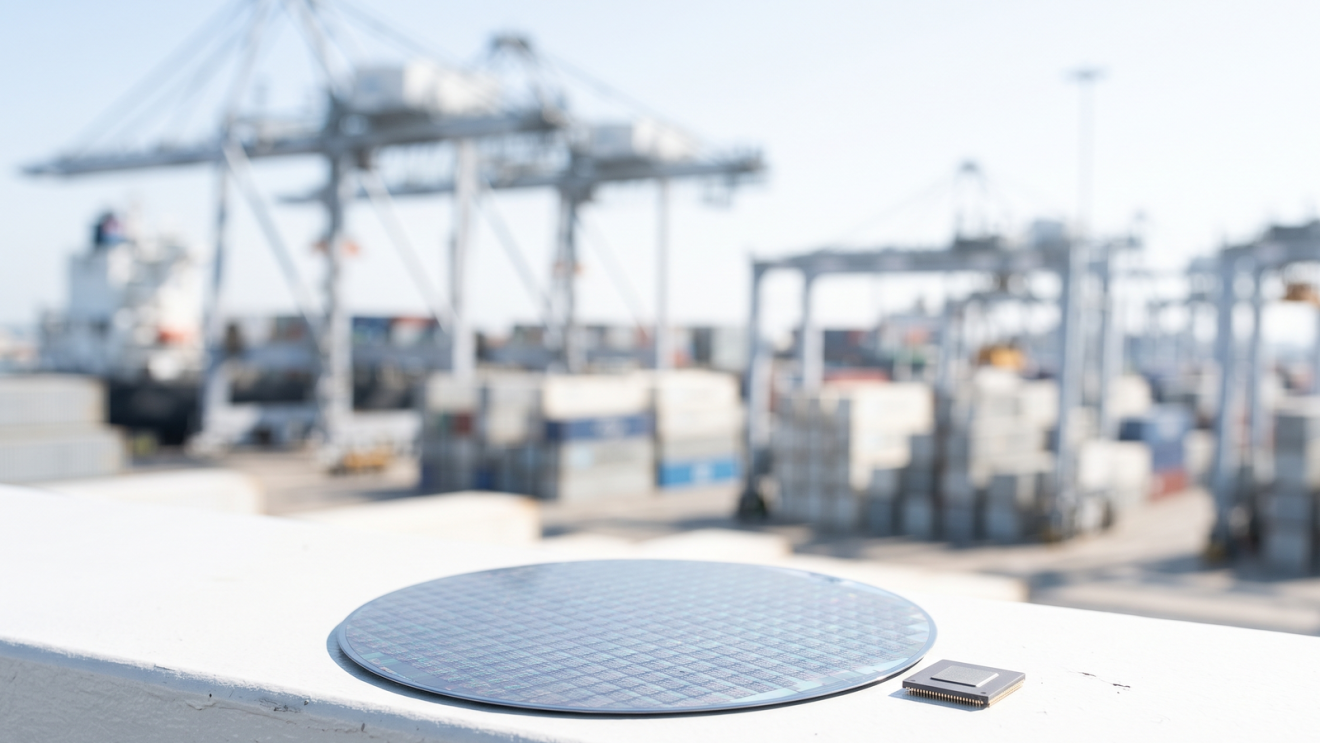
Representative image, AI-generated.
Related articles
- India Opens Semicon 2.0 for Fabs and OSAT, Clears 12 Component Plants Worth ₹7,503 Crore17 November 2026
- India Needs 100,000 Chip Jobs in Three Years. Most Are Not in Chip Design17 November 2026
- SEMICON India 2026 Opens Today With 600+ Exhibitors — and One Scorecard Worth Watching18 September 2026
- Tata Electronics’ ₹27,000 Crore Jagiroad ATMP Plant Targets Production in FY2026–274 June 2026
- Tata Electronics and ASML Sign MoU to Power India’s First 300mm Semiconductor Fab in Dholera28 May 2026