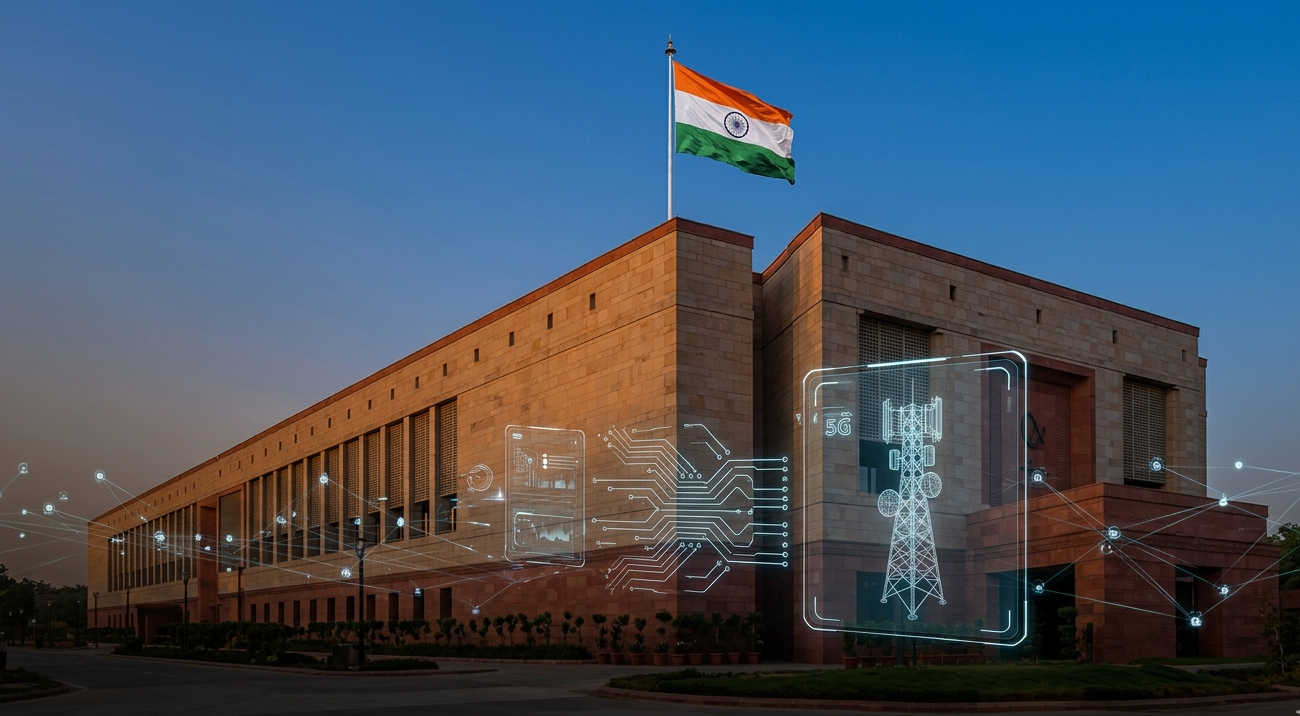
India Celebrates AI Appreciation Day
- Chinmay
- July 18, 2025
- Artificial Intelligence, India
- AI adoption India, AI appreciation day, AI implementation strategy, AI infrastructure, AI marketing automation, AI scalability, artificial intelligence India, business intelligence India, digital transformation India, enterprise AI implementation, enterprise digital solutions, hybrid cloud AI, Indian business technology, machine learning deployment, technology trends 2025
- 0 Comments
India recently celebrated AI Appreciation Day, a moment that perfectly captures the current state of artificial intelligence adoption in the country. While the occasion might feel like it was dreamed up by ChatGPT’s marketing team, it actually represents a significant milestone for Indian enterprises. After years of proof-of-concepts and “AI-powered” marketing speak, companies are finally making the leap from experimentation to serious, scaled deployment. The transformation is real, even if it’s happening more gradually than the headlines suggest. Indian businesses are no longer asking “What is AI?” but rather “How do we implement AI responsibly and effectively?” This shift from curiosity to conviction marks a new chapter in India’s digital transformation story.
The Hybrid Revolution: Why Indian Companies Aren’t Racing to the Cloud
Contrary to popular belief, most Indian enterprises aren’t blindly rushing to cloud-based AI solutions. According to Lenovo’s CIO Playbook 2025, a striking 63% of Indian companies prefer hybrid or on-premises setups for their AI workloads. This isn’t due to technological conservatism – it’s driven by practical business considerations.
Amit Luthra, Managing Director of Lenovo ISG India, explains this trend: “AI is no longer a futuristic concept — it’s a business-critical imperative today.” However, the path to implementation is more nuanced than simply moving everything to the cloud. Indian companies are prioritizing three key factors: latency, privacy, and budget control.
Latency concerns are particularly relevant for manufacturing and financial services, where real-time decision-making can impact millions of dollars in revenue. Privacy considerations are equally important, especially for sectors handling sensitive customer data. Budget constraints, meanwhile, make hybrid solutions attractive as they allow companies to scale gradually without massive upfront investments.
The numbers tell an interesting story: while 49% of Indian enterprises are still in planning or evaluation stages, this doesn’t indicate hesitation. Instead, it reflects a mature approach to AI adoption, where companies are taking time to build proper foundations rather than rushing into implementations that might fail.
Infrastructure Renaissance: Building the AI-Ready Enterprise
The infrastructure conversation has evolved significantly. Venkat Sitaram from Dell Technologies India puts it bluntly: “AI has become a strategic cornerstone… The future belongs to those who responsibly scale their AI initiatives.” This represents a fundamental shift from viewing AI as a side project to recognizing it as core business infrastructure.
Indian companies are now deploying AI across diverse sectors – manufacturing, banking and financial services (BFSI), and healthcare are leading the charge. However, successful deployment requires infrastructure that can seamlessly span edge computing, core data centers, and cloud environments. This hybrid approach allows companies to process sensitive data locally while leveraging cloud resources for less critical workloads.
The edge computing component is particularly crucial for Indian enterprises. With operations spread across vast geographical areas, the ability to process data locally while maintaining central coordination has become a competitive advantage. Manufacturing companies, for instance, are using edge AI to optimize production lines in real-time while feeding insights back to centralized systems for broader strategic planning.
Marketing Gets Personal: The Human-AI Collaboration
The marketing sector exemplifies how AI is moving beyond automation to genuine enhancement of human capabilities. Chris Koehler, CMO at Twilio, shares insights from his team’s AI implementation: they’re using AI to route 90% of inbound leads, deflect 75% of support tickets, and launch campaigns at unprecedented speed.
But the real revelation isn’t about efficiency – it’s about personalization at scale. Twilio’s data reveals that 88% of Indian consumers abandon interactions when marketing feels irrelevant, yet 79% are willing to spend more when experiences are genuinely personalized. This creates a fascinating challenge: AI must understand not just what customers want, but why they want it.
The “2am gadget browser” example illustrates this perfectly. Traditional marketing might recognize the time and product category, but AI-powered systems can analyze behavioral patterns, purchase history, and contextual signals to understand whether this customer is an impulsive buyer, a research-driven purchaser, or someone dealing with insomnia who needs a different type of engagement entirely. Koehler emphasizes that “The future of marketing isn’t AI versus human. It’s AI plus human. That’s where the real magic happens.” This philosophy is becoming central to Indian enterprises’ AI strategies across sectors.
Purpose-Driven AI: Beyond Operational Excellence
Deloitte’s Saurabh Kumar offers a grounded perspective that’s gaining traction among Indian business leaders: “Operational excellence is just the beginning; inclusive intelligence is the destination.” This represents a maturation of AI thinking from pure efficiency plays to more thoughtful, human-centric implementations.
The concept of “inclusive intelligence” is particularly relevant in the Indian context, where technology solutions must work across diverse languages, economic backgrounds, and technological literacy levels. Companies are beginning to recognize that AI systems must be designed not just to optimize processes, but to empower people and create more equitable outcomes.
This shift is evident in how companies are approaching AI training and change management. Instead of replacing human workers, successful AI implementations are focused on augmenting human capabilities. Customer service teams are using AI to handle routine inquiries while focusing human agents on complex problem-solving. Financial analysts are leveraging AI for data processing while dedicating more time to strategic insights and client relationships.
The Road Ahead: Scaling Smart, Building Responsible
As India celebrates AI Appreciation Day, the focus isn’t just on appreciating the technology – it’s about maturing the approach to AI adoption. The companies succeeding with AI share several common characteristics: they’re hybrid-first in their infrastructure approach, human-in-the-loop in their implementation philosophy, and results-focused rather than rhetoric-driven in their metrics.
The future of AI in Indian enterprises is increasingly clear: it’s not about choosing between human and artificial intelligence, but about creating symbiotic relationships that leverage the strengths of both. This “AI plus human” approach is becoming the standard for successful implementations across industries.
Looking ahead, the companies that will thrive are those that view AI not as a magic solution, but as a powerful tool that requires thoughtful implementation, continuous learning, and genuine commitment to responsible scaling. The shift from experimentation to implementation is just the beginning – the real opportunity lies in building AI systems that enhance human potential rather than replacing it. The message for Indian enterprises is clear: the future belongs to those who can blend artificial intelligence with human wisdom, creating solutions that are not just technically sophisticated, but genuinely valuable for businesses and society alike.