Reimagining Smart Factories: India’s Top CIOs Decode the Real IIoT Transformation
From predictive machines to plug-and-play AI, India’s manufacturing leaders are rewriting the rulebook on industrial innovation.
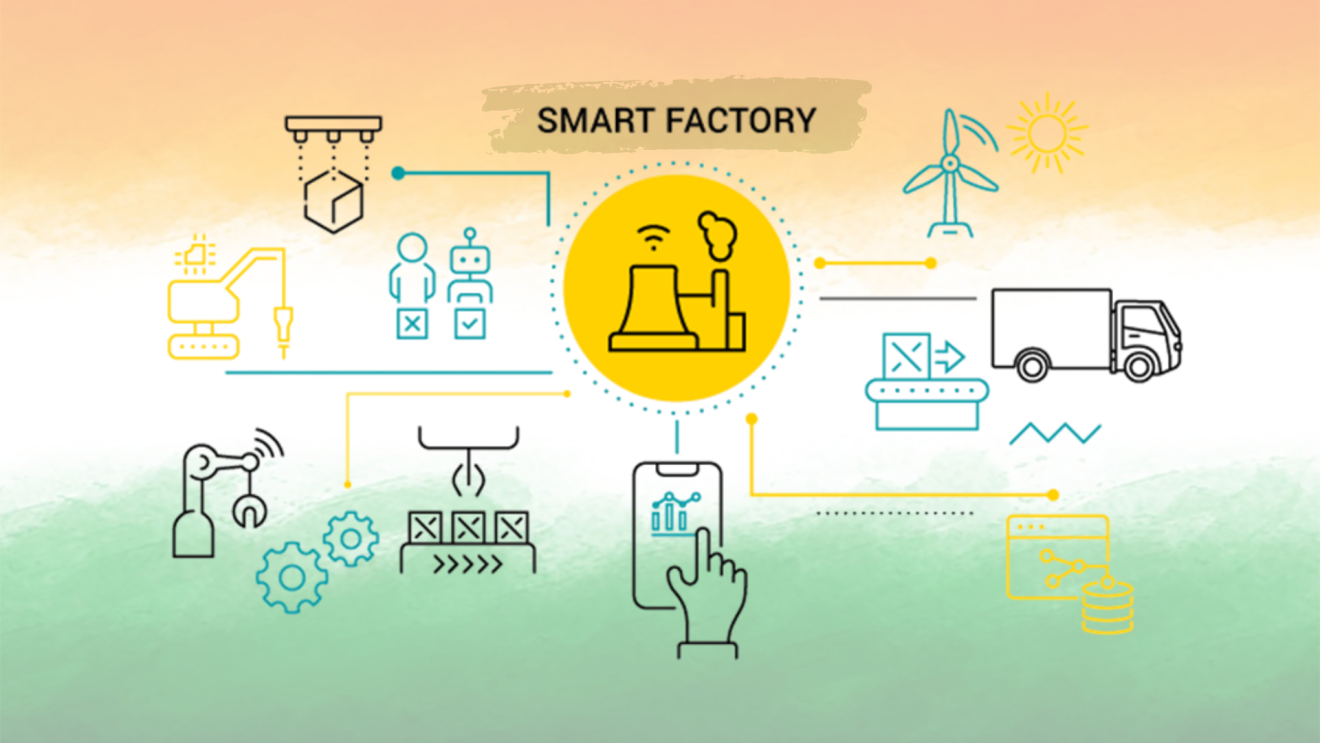
What does it really take to build a smart factory? According to top CIOs from CEAT, Apollo Tyres, ITC, Reliance Jio, and IMFA—technology alone isn’t enough. At the ETCIO Annual Conclave 2025, the conversation shifted from buzzwords to business value, and from pilot projects to full-scale transformation.
From Industry 4.0 to 5.0: Cobots and the Human Touch
Debashish Roy, CDTO at CEAT, emphasized that the next wave of smart factories must be human-centric. While automation remains critical, the focus is shifting toward collaborative robots (cobots), sustainability, and real-time adaptability. He introduced the concept of foresight factories—systems that don’t just predict failure but adapt to changing market signals in real time. Roy also highlighted the growing role of the industrial metaverse, where AR/VR technologies enable immersive training and seamless visual inspections.
“Cobots are not just machines. They are teammates designed to boost both productivity and safety,” Roy said.
Success Must Be 3D: Efficiency, Revenue, Society
Gaurav Kataria, VP – Digital & CDIO at ITC, argued that smart manufacturing must deliver across three layers: efficiency, revenue, and societal impact. He cited a 2.4% EBITDA boost in ITC’s paper division through digital tools—but warned that the real challenge lies in making these solutions accessible to MSMEs.
“The intent is there. Now we need to democratize the tech,” he added, pointing to MSMEs experimenting with 3D printing and modular design.
Smart Doesn’t Mean Complex—It Means Aligned
The panel unanimously agreed: many digital efforts fail because factories start with tech—not a problem. Business translators—those who speak both factory operations and AI—are crucial.
“Without this bridge, you just end up with dashboards that nobody uses,” Kataria warned.
Agentic AI in Action: Machines That Talk
At Apollo Tyres, Harsh Vardhan described their initiative “Machines Are Talking”, where engineers use agentic AI—systems with explainability, safety, and scalability at the core. One such experiment used causal AI with quantum-inspired ML for demand sensing—once a futuristic idea, now delivering real business impact.
“The ROI was real. But we stayed grounded in business logic,” Vardhan said.
Jio’s Lego Model: Scaling Without Complexity
Kavit Gupta of Reliance Jio showcased their Lego-as-a-Service IIoT model. Tested at Jio’s Jamnagar plant and now scaled across industries, this framework allows factories to adopt edge solutions—like smart surveillance and private 5G—without high upfront costs.
“We helped Airbus reduce inspection time by 80% and cut Hitachi’s plant downtime in half,” Gupta shared.
Turning Dashboards into Dollars
Santosh Kumar Satapathy, Group CIO at IMFA, demonstrated how smart integration of SAP S/4HANA, ML models, and dealer systems delivered tangible ROI:
- 23% reduction in inventory
- 15–17% boost in cash flow
- Faster procurement-to-delivery cycles
“It wasn’t about dashboards—it was aligning tech with financial rhythm,” he emphasized.
The Big Takeaway?
India’s smart factory leaders aren’t chasing the next tech—they’re aligning every tool with business outcomes. The road to Industry 5.0 lies not just in cobots and cloud, but in people, processes, and purpose. For MSMEs especially, the opportunity is ripe—to leapfrog complexity using scalable, outcome-driven IIoT models.
Related articles
- SEMICON India 2026 Opens Today With 600+ Exhibitors — and One Scorecard Worth Watching18 September 2026
- PM Modi to Inaugurate SEMICON India 2026 on 17 September, With 500+ Exhibitors From 40 Countries28 August 2026
- Hannover Messe 2026: Industrial AI, Digital Twins, and OT Security Take Centre Stage This Week15 April 2026
- Mouser India Technical Roadshow 2025 – Pune Edition23 June 2025
- SEMI, Messe München India to Host SEMICON India23 November 2023