30 Million LoRaWAN Meters: What Europe’s Water Utilities Know That India’s Rollout Should Hear
Key takeaways
- More than 30 million of the roughly 150 million LoRaWAN devices worldwide are now meters, one in five, with water leading demand (LoRa Alliance, 10 Nov 2026).
- EU-wide public tenders mentioning LoRaWAN more than quadrupled between 2019 and 2025, and about half of them are for water metering (Kurrant Tender Tracker).
- India has sanctioned 20.33 crore smart meters under RDSS and installed 5.73 crore, about 28% (Ministry of Power, 27 July 2026); the scheme ends 31 March 2028.
LoRaWAN smart metering is no longer a pilot story. At Enlit Europe in Vienna on 10 November 2026, the LoRa Alliance said more than 30 million of the roughly 150 million LoRaWAN devices connected worldwide are now meters, one in five, with water leading demand. For India, which is in the middle of a very large electricity smart-meter programme, the useful question is not whether LoRaWAN is winning. It is which meters Europe’s utilities chose it for, and why.
What the numbers say
The release rests on evidence from interested parties. Kurrant, which tracks European public procurement through its Tender Tracker platform, says EU-wide tenders mentioning LoRaWAN more than quadrupled between 2019 and 2025, rising about 13% in 2025 alone. Around half are for water metering, followed by building energy metering, network deployments and street lighting. Netmore, a LoRaWAN network operator, found LoRaWAN in 70% of the publicly announced smart water metering decisions under AMP8, the 2025–2030 investment cycle for water companies in England and Wales, alone or as the primary part of a dual-technology design.
Single networks now run into the millions. ZENNER Connect reports 12 million devices on its network, Veolia more than 4 million active smart meters across France, and Itron more than 3 million LoRaWAN assets, mostly smart water meters. As IoT Business News noted, a tender mentioning a technology is not a contract, so this measures interest, not market share.
Why water, and why it worked
The reason is the meter. A water meter has no mains supply; it sits in a pit or basement and must run for years on a battery. LoRaWAN’s Class A mode suits that job: the device wakes, sends a short uplink, listens briefly for a reply and sleeps. With licence-free spectrum and certified devices, a utility can own its network and buy from several suppliers. That is the pitch the Alliance’s CEO, Alper Yegin, made in the release: multi-vendor choice, interoperability and long-term supply security.
India’s rollout is a different problem
India’s programme is electricity-first and prepaid. Under the Revamped Distribution Sector Scheme (RDSS), 20.33 crore smart meters are sanctioned: 19.79 crore consumer meters, 52.53 lakh distribution-transformer meters and 2.05 lakh feeder meters. In a Rajya Sabha reply answered on 27 July 2026, the Ministry of Power said 5.73 crore had been installed under the scheme and 7.24 crore across all schemes. The scheme’s sunset date is 31 March 2028.
RECPDCL’s 2024 expression of interest for head-end and communication providers asks for communication over RF mesh as well as cellular, and allows RF, PLC, cellular, NB-IoT or a combination depending on the installation area. An electricity meter is mains-powered, so the battery argument that carried LoRaWAN in European water largely disappears. A prepaid meter also needs a dependable downlink for balance and tariff updates and for remote disconnect and reconnect.
Downlink is LoRaWAN’s thin side. A gateway transmitting to one meter is not listening to the others, and India’s licence-exemption rules cap transmit time: for meter-reading equipment at up to 500 mW e.r.p., network access points may use a 10% duty cycle and other devices 2.5%. Fine for daily reads; tight for millions of meters expecting prompt commands. Firmware is the other limit. The Alliance lists firmware updates over the air (FUOTA) among LoRaWAN’s capabilities, but pushing an image to a large fleet over a low-rate link is slow, so a meter meant to last a decade needs a firmware plan from day one.
Where LoRaWAN fits in India: water
The better match is the meter India has barely started on. MoHUA’s AMRUT 2.0 reforms toolkit puts non-revenue water in India above 31% and targets 20%. To earn the reform incentive, a city must meter all water sources and bulk distribution points, and set up District Metered Areas covering 50% of its population with 100% metering inside them, household meters included. Battery meters in pits, read a few times a day, owned by a municipal body for a decade or more. That is Europe’s use case.
Spectrum is not the blocker. DoT’s G.S.R. 853(E) of 10 December 2021 exempts low-power short-range devices in 865–868 MHz from licensing, and its tracking and data-acquisition category names meter reading and water, gas and electricity sensors. LoRaWAN’s IN865 channel plan sits inside that band.
| Europe (LoRaWAN metering) | India (RDSS smart metering) | |
|---|---|---|
| Lead use case | Water, then building energy metering | Prepaid electricity: consumer, DT and feeder meters |
| Meter power | Battery, often in pits and basements | Mains |
| Scale | 30M+ LoRaWAN meters worldwide; 12M devices on one ZENNER network | 20.33 crore sanctioned; 5.73 crore installed (27 July 2026) |
| Network | LoRaWAN, sometimes paired with a second technology | RF mesh and cellular, incl. NB-IoT, per RECPDCL EOI |
| Spectrum | Licence-free sub-GHz | Licence-free 865–868 MHz (DoT, 2021) |
| Downlink need | Low: periodic reads and alarms | High: balance, tariff, disconnect and reconnect |
Why it matters for India
Indian meter makers that won RDSS volumes on electricity have a second market forming in municipal water, and it rewards a different product: a multi-year battery budget, an IN865 LoRaWAN radio and certification that lets a city buy from more than one vendor.
Water boards should not default to riding an electricity AMISP’s network; a city-owned LoRaWAN network can also carry reservoir-level, pressure and streetlight sensors, which improves the economics.
The scarce skill is network planning for dense Indian cities, from gateway siting to duty-cycle budgets and basement coverage.
Our view
LoRaWAN is the wrong primary network for India’s prepaid electricity meters and the right one for its water meters. RDSS made a sound call with RF mesh and cellular for mains-powered, command-heavy meters; forcing LoRaWAN there would mean fighting its downlink on every recharge. But AMRUT 2.0’s metering push is exactly the battery-powered, read-a-few-times-a-day problem Europe has already solved at scale. Our position: water boards should specify open, certified LoRaWAN on IN865, multi-vendor meters and city ownership of the network, and Indian meter makers should build that as an export-grade product line, not a side project. The 30 million meters on LoRaWAN are the proof; India is missing the tender language.
Related reading
- All about LoRaWAN – Everything you need to know
- STM’s LoRa SoC – Making Farming Smarter
- India’s Industrial Smart Cities Get ₹28,602-Crore Push Under NICDP
- UPI Meets IoT: India’s Smart Devices Set to Join the Payments Network
Sources
- LoRa Alliance via Business Wire (FinancialContent syndication): LoRaWAN Smart Metering Reaches Scale as European Tenders Quadruple, 2026-11-10
- IoT Business News: LoRaWAN Gains Ground in European Smart Metering as Utility Deployments Expand, 2026-11-11
- Ministry of Power, Government of India: Rajya Sabha Unstarred Question No. 943: Delay in smart meter installation, 2026-07-27
- REC Power Development and Consultancy Ltd (RECPDCL): EOI for empanelment of HES and communication infrastructure service providers for AMI prepaid solution (RECPDCL/SM/2024-25/003), 2024-05-27
- Ministry of Communications (WPC Wing), Gazette of India: G.S.R. 853(E): Use of Low Power Equipment in the Frequency Band 865-868 MHz for Short Range Devices (Exemption from Licence) Rules, 2021, 2021-12-10
- Ministry of Housing and Urban Affairs: AMRUT 2.0 Reforms Toolkit, 2022-11
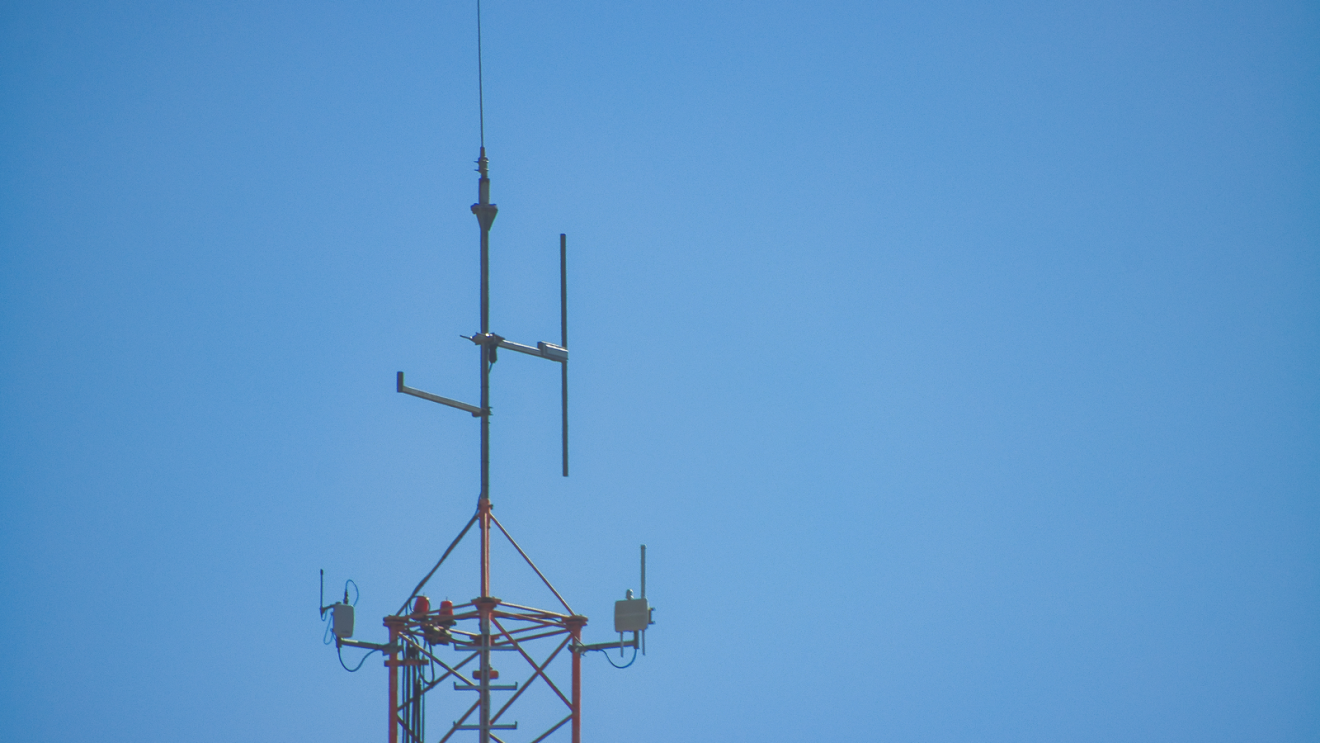
LoRaWAN gateways from Kerlink and MultiTech on a utility lattice mast on the island of Sylt, Germany, April 2021. Image: Fabian Horst / Wikimedia Commons (CC BY 4.0).
Related articles
- Nordic’s nRF71 Puts Wi-Fi 6, BLE, Thread and an NPU on One Chip at 20x Lower Standby Power17 November 2026
- Silicon Labs – BLE for Real Time Location Tracking12 February 2019
- Moving Faster with Bluetooth 5.08 June 2017
- TI supports sub-GHz and Bluetooth on one MCU15 September 2016
- What’s new with TI Bluetooth Smart? See it all at Bluetooth World 201611 March 2016