From Cotton to Code: Why Manufacturers Must Learn from India’s AI & IoT-Powered Textile Surge
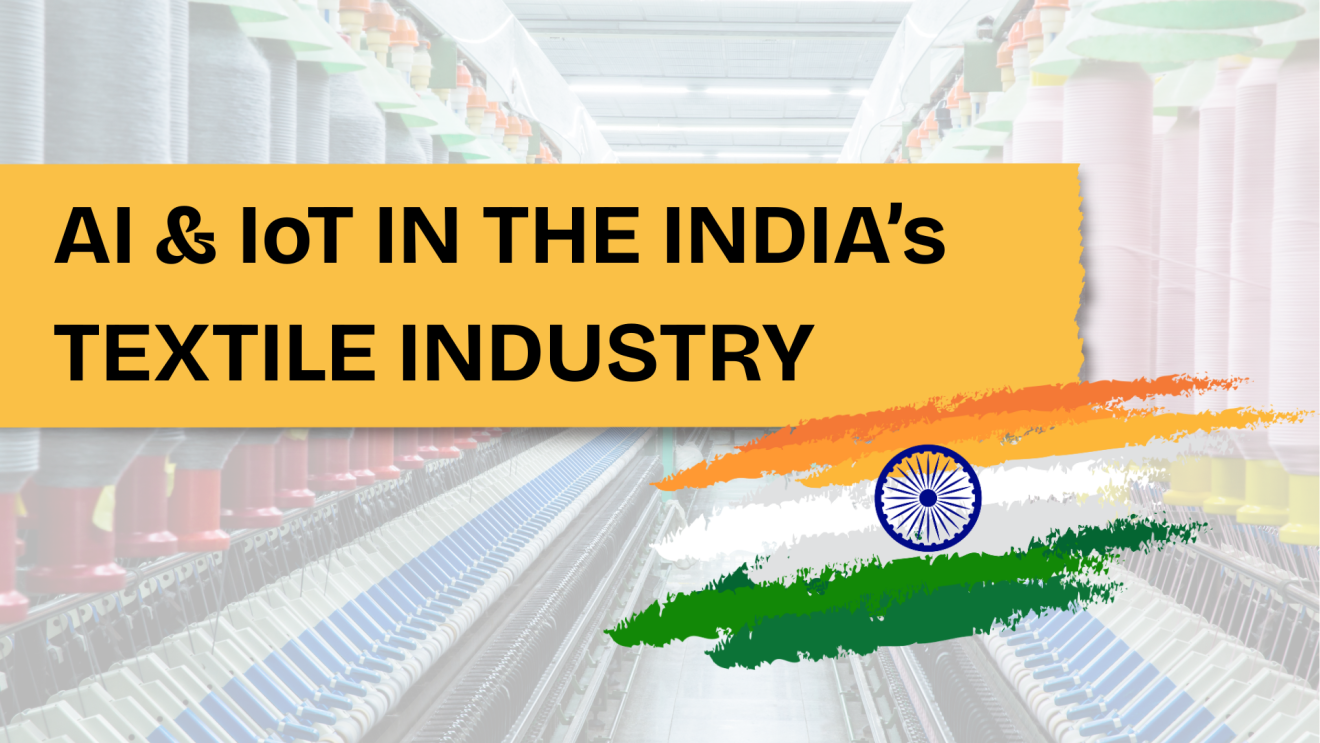
India’s textile industry, with roots as old as the Indus Valley civilization, is now embracing a modern revolution—AI-powered manufacturing. While global headlines focus on high-tech sectors, something equally powerful is brewing in India’s traditional heartlands.
The town of Tiruppur in Tamil Nadu, responsible for 55% of India’s knitwear exports, is leading this charge. Once dominated by manual processes and conservative MSMEs, Tiruppur has seen a 10% rise in production after implementing AI and automation tools. From smart cutting machines to AI-enabled stitching and predictive maintenance, data and algorithms are now just as important as yarn and fabric.
“Earlier, our production efficiency was around 65%. With automation, it’s gone up to 75%,” says K M Subramanian, President of Tiruppur Exporters’ Association (TEA).
With international giants like Decathlon, Tommy Hilfiger, GAP, Walmart, and Marks & Spencer ramping up orders, the pressure to deliver quality at scale has pushed even micro and small units to adopt technologies like:
- AI-integrated sewing machines from brands like Juki, Yamato, Pegasus, Brother
- CAD-CAM for design and cutting optimization
- Digital logistics systems from firms like Allcargo Gati
- SaaS platforms like Reverse Resource for sustainable recycling
Even cottage-level units are exploring tools like ChatGPT and Canva to follow global design trends.
“Across the value chain, machines now come with voice control, display metrics, and can be monitored via smartphone,” says Subramanian.
Meanwhile, spinning mills are seeing a transformation. One TEA member who needed 900 workers to run a mill in 2007 now operates a similar-sized automated mill with just 270 workers—a necessity in an industry hit hard by labour shortages. Yet, this transformation isn’t about replacing jobs—it’s about elevating skills. As Chandrima Chatterjee of CITI (Confederation of Indian Textile Industry) puts it:
“AI in India should upgrade labour, not replace it.”
While countries like Japan are experimenting with sewing robots (stitch bots) for ultra-precision, India’s approach blends human skill with intelligent automation.
The takeaway?
If the textile sector—a legacy, fragmented, labour-intensive industry—can adopt AI with visible results, so can other manufacturers. The future of Indian manufacturing lies in augmented human capability, where AI doesn’t replace tradition—it strengthens it.
Related articles
- Bridging the Skill Gap : Where are the Jobs for India’s Engineers?12 August 2025
- AI, But Verify: How IIT Delhi is Teaching the Future to Think5 August 2025
- IndiaAI Mission: 570 AI Labs. 1.5 Lakh Students29 July 2025
- India Celebrates AI Appreciation Day18 July 2025
- AI for All: 10 Lakh Citizens to Get Free AI Training via CSCs in India’s Villages17 July 2025